
Defending climate action from deliberate deception
Deliberate disinformation poses a serious risk to climate action. Unlike misinformation, it is spread intentionally to mislead.
The 2024 Global Risks Report ranked misinformation and disinformation as the top short-term risk to society.
Organised campaigns target cities and climate policies
Cities worldwide are facing well-coordinated campaigns that spread misinformation about both climate science and climate action. These efforts confuse the public, erode trust in local governments, and create political opposition to measures designed to protect communities.
Who is spreading climate disinformation?
Influencers, trade groups, advocacy organisations, and think tanks have been organising strong, well-funded campaigns to disrupt climate action and shape public views and policies. They do this to support their financial, political, or ideological goals.
The fossil fuel industry’s attempts to deny, derail, and delay climate action are well-known. Since the 1970s, Big Oil has hidden evidence showing that burning fossil fuels harms our planet. They use lobbyists, PR firms, and consultants to spread misleading or false narratives about the climate crisis.
Cities are building trust to defeat false narratives
Mayors and city leaders are creating effective strategies to build information resilience. The goal is to build trust in communities and create space for open discussion on the climate crisis and the solutions. Communities that trust the information they receive are more likely to support climate initiatives. This support helps make those programmes more effective and sustainable over time.
Countering climate disinformation is climate action
C40 helps cities tackle disinformation and improve how they respond to such threats. We share approaches that build trust in climate science and policy. Working together, cities can support democratic debate, keep residents informed, and base climate action decisions on reliable, scientific evidence.
Countering disinformation requires lasting investment in building societal resilience, and media and information literacy.
António Guterres, United Nations Secretary-General
Understanding the challenge
How disinformation disrupts climate progress
Climate disinformation operates through three main strategies, each aimed at slowing action:
1. Denial
Falsely claiming climate change isn’t real or human-caused
This can appear in comments about local weather or selective use of data.
2. Delay
Falsely arguing that climate solutions should be slowed down
These arguments often question whether climate policies work, exaggerate costs, or highlight small drawbacks while ignoring larger benefits. Delay tactics are most common in debates on transport, energy, and building rules.
3. Control
Falsely framing climate policies as government overreach
This narrative claims climate action is a threat to personal freedom. It often overlooks how climate policies can actually increase choice and enhance quality of life.
These strategies create confusion and doubt, even when the science is clear and solutions are proven. They take advantage of people’s worries about change, economic security, and freedom. At the same time, they hide the true benefits that climate action offers to communities.
Taking action together
Ways to build informed climate communities
Everyone can help counter climate disinformation and boost information integrity in their communities:
For mayors and city leaders
Strategies and tools for local government
- See C40’s guide on how cities can tackle climate disinformation for ways to build trust and push back against false claims.
- Connect with other mayors and cities in C40’s networks to share experiences and learn from their success.
- Create communication protocols to help your team respond quickly and effectively to disinformation campaigns against your climate policies.
For residents and community members
Strengthening information integrity locally
- Learn how to spot common disinformation tactics so you can recognise them in your community.
- Use reliable information from your city, trusted news outlets, and scientific bodies.
How cities build trust
Proven approaches for strengthening community support
C40 helps cities worldwide create strategies to fight disinformation and strengthen community ties. Our methods focus on:
Creating trusted information channels
Building reliable sources that residents can depend on
Cities set up clear, easy-to-use communication channels. These provide regular updates on climate policies, progress, and impacts. This includes user-friendly websites, community meetings, social media, and partnerships with local media.
Demonstrating real policy benefits
Showing how climate action improves daily life
Cities highlight the everyday benefits of climate action that people can experience directly. Cleaner air from transport changes, lower energy bills from efficient buildings, new jobs in renewables, and improved public spaces all make a visible difference. When residents see these gains, false claims lose their impact.
Engaging communities in dialogue
Creating spaces for honest conversation
Cities hold town halls, community forums, and neighbourhood meetings. Here, residents can ask questions, share concerns, and learn about climate policies. These talks help address worries, clear up misunderstandings, and build connections between city officials and community members. Direct engagement makes it harder for disinformation to take root.
Building coalitions with credible messengers
Partnering with trusted community voices
Cities partner with local businesses, faith groups, health experts, teachers, and community leaders. These partnerships help amplify accurate information through trusted voices. When respected community members back climate policies, it’s harder for disinformation campaigns to shake public confidence.
Practical tools cities can use
Our Extreme Weather Disinformation Playbook helps cities tackle the growing spread of disinformation that often appears during extreme weather events. This threatens to undermine urban climate action and subnational democracy.
The Playbook equips mayors and city staff with practical tools and best practices on how to effectively plan, prepare and respond to disinformation during climate emergencies such as floods, wildfires, and heatwaves.
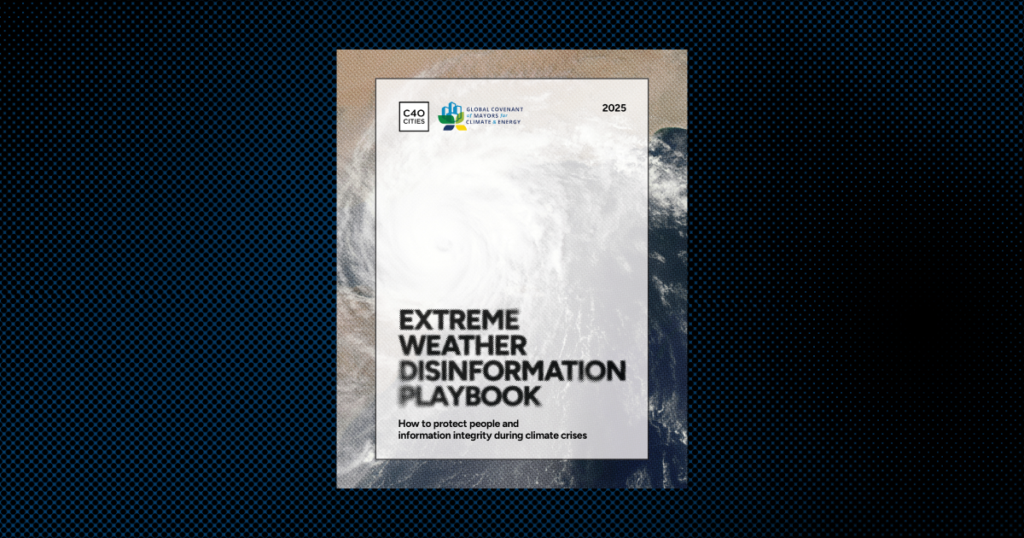
Request the Extreme Weather Disinformation Playbook
Frequently asked questions
What is the difference between misinformation and disinformation?
Misinformation is false information shared without bad intent. People may truly believe what they are sharing.
Disinformation, however, is false information shared on purpose to deceive or harm. Both can be harmful, but disinformation is often part of organised efforts to disrupt climate action.
How can cities protect themselves from organised disinformation campaigns?
Cities can prepare by setting up trusted ways to communicate and by involving communities early. They should point to the real benefits of climate policies and work with local voices that people trust. Quick response plans and sharing experience with other cities also help. The most important step is building strong communities equipped with factual information before disinformation takes hold.
What should I do if I see climate disinformation being shared in my community?
Rather than arguing with false claims, share accurate information from trusted sources such as your city, recognised scientists, or reliable news outlets. Keep discussions respectful and focus on the local benefits of climate action. If the disinformation seems part of a larger campaign, consider alerting local officials or media.
How do I know if climate information is reliable?
Trust information from established scientific institutions, peer-reviewed research, and well-known news organisations that cite their sources.
Be wary of information that triggers strong emotions, lacks sources, or comes from unknown websites. Always cross-check important claims with multiple reliable sources before sharing.